Membrane lifecycle: fouling, CIP and getting years out of an element
Membranes are the consumable at the heart of an RO plant. How long they last — and how much energy they cost while they do — is decided by how you read fouling and time your cleans.
The membrane elements are the heart of an RO plant and its main consumable. Whether a set lasts three years or seven, and how much energy it burns along the way, is largely decided by two operational habits: how you read fouling, and when you clean.
Fouling is not one problem
"Fouling" is shorthand for several different things accumulating on the membrane, each with its own cause and cure:
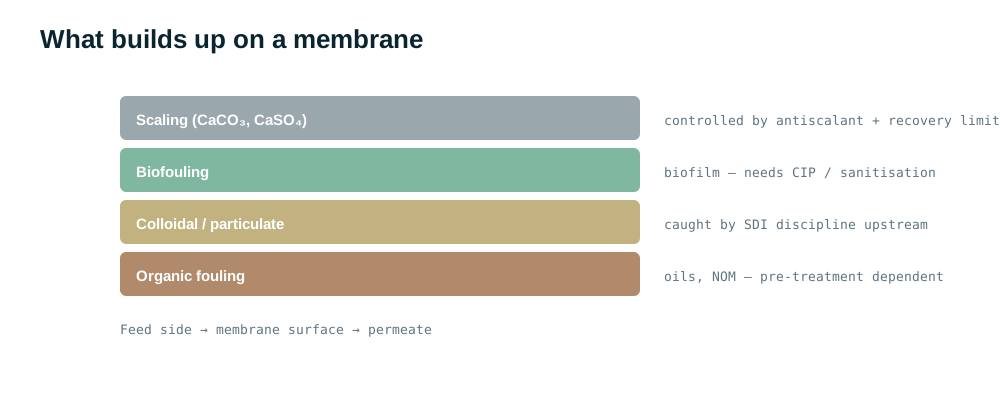
- Scaling — sparingly soluble salts like calcium carbonate and sulphate precipitating as the brine concentrates; controlled by antiscalant and by not over-pushing recovery.
- Biofouling — a living biofilm; the hardest to shift, needing proper cleaning and sometimes sanitisation.
- Colloidal / particulate — fine suspended matter, caught upstream by SDI discipline.
- Organic fouling — oils and natural organic matter, largely a pre-treatment question.
Diagnosing which one you have is half the battle, because the cleaning chemistry and the prevention are different for each.
Reading the plant before it tells you the hard way
A membrane rarely fails suddenly; it degrades on a curve you can watch. Two normalised trends tell the story:
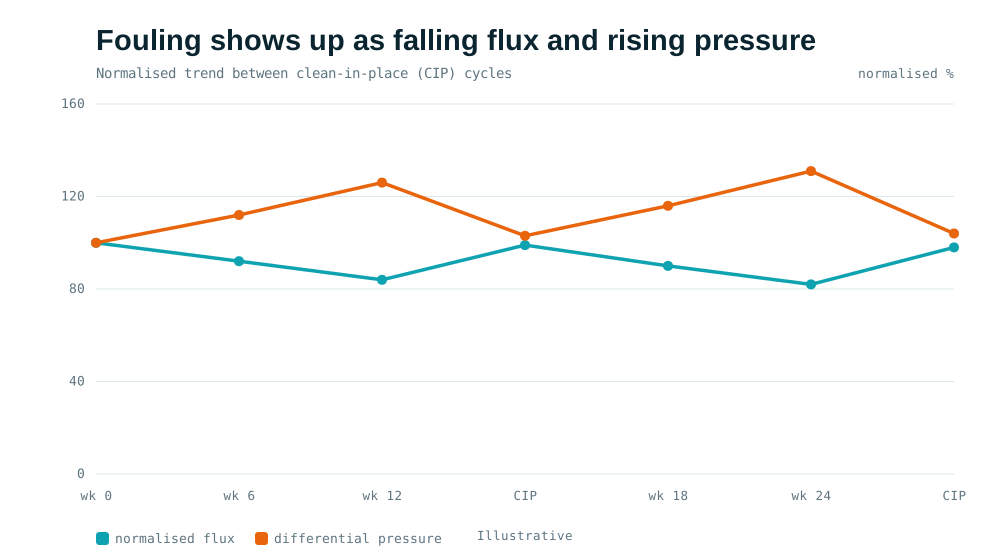
As fouling builds, normalised permeate flux falls (you get less water for the same pressure) and differential pressure rises (the feed has to shove harder to cross the element). Track them — corrected for temperature and pressure — and the plant warns you well before salt passage climbs or the pump labours. The sawtooth in that chart is the goal: a clean-in-place (CIP) that restores most, though never quite all, of the lost performance.
When to clean — and when to stop cleaning
- Clean on a trigger, not just a calendar. The usual rule of thumb: when normalised flux drops ~10–15%, or differential pressure rises ~15%, or salt passage climbs, it is time for CIP.
- Match the chemistry to the foulant. Acidic cleans for scale, alkaline (and sometimes biocidal) cleans for organics and biofilm. Guessing wastes chemicals and membrane life.
- Clean before it sets. A foulant caught early lifts off; one left to mature can become irreversible, and no CIP brings it back.
- Know when an element is spent. Every clean recovers a little less. When a membrane no longer responds — passing salt or starving on flux — replacing it is cheaper than the energy and product a fouled one quietly costs.
A membrane that is monitored and cleaned on time can run for years on its original elements. One that is run until it complains is replaced early and burns extra energy the whole way there.
The four families of fouling
Membranes degrade in four characteristic ways, and telling them apart is half the job. Particulate and colloidal fouling is a pre-treatment failure. Scaling is inorganic — carbonate, sulphate or silica dropping out as recovery concentrates the feed. Organic fouling is a film of natural organic matter or oil. Biofouling is a living biofilm that regrows if you only clean it. Each leaves a different fingerprint in the data: a rise in differential pressure points to particulates or biofilm; a fall in normalised permeate flow with rising salt passage points to scale; and the cure differs accordingly — better pre-treatment, more antiscalant or lower recovery, an alkaline clean, or a biocide programme.
Read the trends, not the gauges
The single most useful discipline is normalisation: correct flow, pressure and salt passage back to a fixed reference temperature and recovery, and watch the trend rather than the raw gauges. A raw pressure reading drifts with the seasons and tells you little; a normalised permeate flow that has fallen 10–15% from baseline is an unambiguous instruction to clean now, while the fouling is still soft and reversible. Wait for a crisis and the deposit sets hard, and some of the loss never comes back.
Cleaning, and resting, done right
A clean-in-place is a chemistry problem. High-pH cleaners (caustic with surfactant) lift organics and biofilm; low-pH cleaners (citric or other acids) dissolve scale; the order, temperature and soak time all matter, and the wrong sequence can fix a foulant in place rather than removing it. Equally important is what happens when an element is idle — left wet and unprotected it grows biofilm within days, so proper preservation (a metabisulphite or glycerine solution) is what separates a membrane that lasts its rated life from one replaced a year early.
The upstream point is the one worth repeating: most membrane life is won or lost in pre-treatment. SDI control, antiscalant dosing and chlorine removal decide how often you clean — and how many years you get — long before the first CIP pump is ever switched on.